How to Check TMT Bar Quality on Site: 8 Practical Checks
Steel is the most expensive structural material on most sites. These eight checks help you avoid underweight, mislabelled and substandard bars.
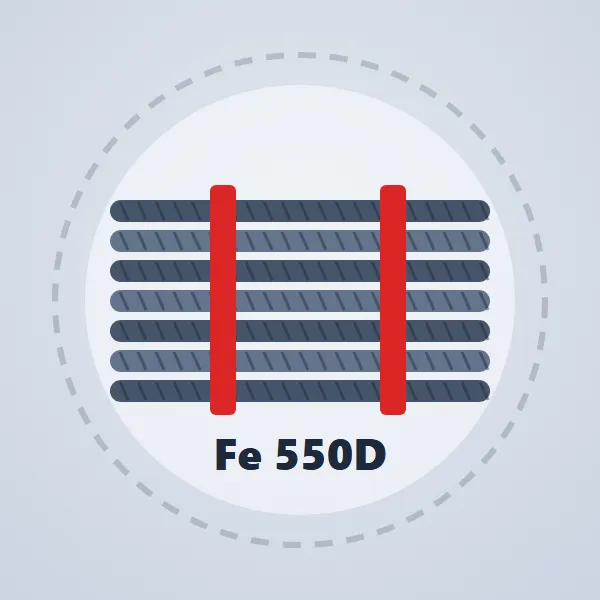
To check TMT bars on site: confirm the BIS mark, manufacturer, grade and diameter rolled on the bar; get the mill test certificate for the heat or batch; weigh a measured length and compare with D²/162 kg/m within the allowed tolerance; check that ribs are uniform and continuous; do a simple bend test on a sample; check for loose rust, cracks or laminations; and store bars off the ground, covered and separated by size.
1. Markings on the bar
Genuine TMT bars carry rolled-on markings at intervals: manufacturer's identification, grade (for example, 500D) and often the diameter. Bars should also carry or be accompanied by BIS certification details. Missing or inconsistent markings are a red flag.
2. Mill test certificate (MTC)
Ask for the MTC for each heat or lot. It reports chemical composition (carbon, sulphur, phosphorus) and mechanical properties (yield strength, tensile strength, elongation). Compare the values with IS 1786 for your grade. See TMT grades explained.
3. Weight per metre
Cut or measure a known length, weigh it and compare with the nominal weight D²/162 kg/m:
| Size | Nominal kg/m |
|---|---|
| 8 mm | 0.395 |
| 10 mm | 0.617 |
| 12 mm | 0.889 |
| 16 mm | 1.580 |
| 20 mm | 2.469 |
| 25 mm | 3.858 |
IS 1786 allows a small tolerance that depends on bar size. Consistently underweight bars mean less steel than you paid for — and less than the designer assumed. See steel weight formula.
4. Diameter
Measure across the core with vernier calipers. Remember that ribs increase the outside measurement; weight per metre is the more reliable check.
5. Ribs
Ribs should be uniform, continuous and well-defined along the length. Ribs give the bond with concrete. Worn, shallow or irregular ribs reduce bond.
6. Bend and rebend test
On a sample, bend the bar around a mandrel to the angle the standard specifies (a lab test), or as a simple site check, bend a short piece to 180° around a suitable pin. A good bar bends without cracks on the outer surface. For formal acceptance, use a lab.
7. Surface condition
- Light, tight surface rust is normal and usually acceptable.
- Loose, flaky rust, pitting or scale must be removed and the bar checked for weight loss.
- Cracks, laminations or seams — reject.
- No oil, paint or mud at the time of concreting.
8. Storage
- Store off the ground on timber sleepers.
- Cover with tarpaulin, especially in the monsoon and near the coast.
- Separate by size and grade with tags.
Lab testing
For important structures, send samples to an accredited lab for tensile, bend/rebend and chemical tests, especially when sources change.
Key takeaways
- Check markings, MTC and weight per metre for every lot.
- Ribs must be uniform; bars must bend without cracking.
- Store covered and off the ground; reject flaky rust and cracks.
Request TMT quotes with grade and BBS quantities.
Frequently asked questions
How do I check the weight of a TMT bar?
Weigh a measured length and compare it with the nominal weight D²/162 kg per metre. For example, a 12 mm bar should weigh about 0.889 kg/m, within the tolerance allowed by IS 1786.
Is rust on TMT bars acceptable?
Light, tight surface rust is generally acceptable. Loose, flaky rust or pitting must be removed and the bar checked for weight loss before use.
What is a mill test certificate?
A document from the steel manufacturer reporting the chemical composition and mechanical properties of a heat or batch of bars, used to verify compliance with IS 1786.
Need materials for this work?
See indicative delivered prices for your pincode, or get an itemised project quotation with freight, unloading and GST shown line by line.
This guide is general information for planning and buying. Quantities, grades and methods for your structure must follow your approved drawings, your engineer’s specification and the applicable Indian Standards.