Water-Cement Ratio Explained: The Single Biggest Factor in Concrete Strength
Adding "just a little more water" is the most common way good cement is turned into weak concrete. Here is why the water-cement ratio matters so much.
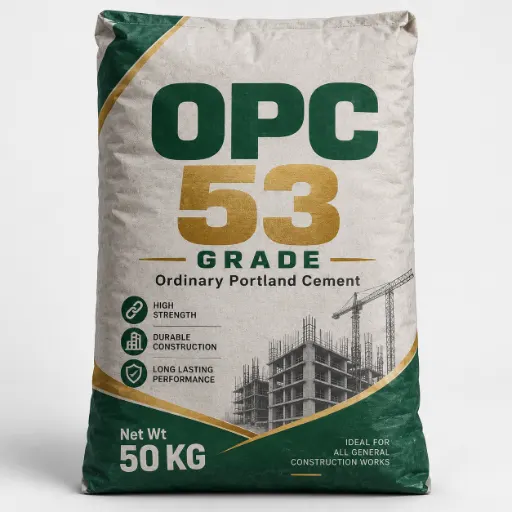
The water-cement ratio (w/c) is the weight of mixing water divided by the weight of cement. Lower ratios give stronger, denser, more durable concrete; every extra litre of water beyond what hydration and workability need leaves pores that reduce strength. Typical values are about 0.50–0.55 for M20, 0.45–0.50 for M25 and 0.40–0.45 for M30. IS 456 caps w/c between 0.55 and 0.40 depending on exposure. Use plasticisers, not water, for workability.
What is the water-cement ratio?
w/c = weight of water ÷ weight of cement
For one 50 kg bag at w/c 0.5, that is 25 litres of water.
Why does extra water weaken concrete?
Cement needs only about 0.25 to 0.30 of its weight in water to hydrate fully. The rest is added for workability — so the concrete can be placed and compacted. When the surplus water evaporates, it leaves capillary pores. More pores mean:
- Lower strength — strength falls steeply as w/c rises (Abrams' law).
- Higher permeability — water, chlorides and CO2 get in, and steel corrodes sooner.
- More shrinkage and cracking.
- More bleeding and segregation, leaving weak, dusty surfaces.
Typical values
| Concrete grade | Typical w/c (guide) | Water per 50 kg bag |
|---|---|---|
| M15 | 0.55–0.60 | 27–30 L |
| M20 | 0.50–0.55 | 25–27 L |
| M25 | 0.45–0.50 | 22–25 L |
| M30 | 0.40–0.45 | 20–22 L |
Design mixes set the exact value. Remember to deduct free moisture in sand and aggregate — wet sand can carry several litres of water per bag of cement.
IS 456 maximum w/c by exposure (RCC)
| Exposure | Max. w/c |
|---|---|
| Mild | 0.55 |
| Moderate | 0.50 |
| Severe | 0.45 |
| Very severe | 0.45 |
| Extreme | 0.40 |
See concrete grades and IS 456 rules.
How to get workability without extra water
- Plasticisers / superplasticisers — admixtures that make concrete flow at the same or lower w/c. Use as per manufacturer and engineer guidance.
- Well-graded aggregates — fewer voids need less paste.
- Proper vibration — a stiffer mix compacted well beats a sloppy mix poured in.
- Control site additions — measure water with a marked bucket or meter; do not let it be added "by eye".
Simple site checks
- Slump test — measure workability against the specified slump. A sudden jump means water was added.
- Consistency across batches — same gauge box, same measured water, same mixing time.
Key takeaways
- w/c = water ÷ cement by weight; lower is stronger and more durable.
- M20 typically 0.50–0.55; M25 0.45–0.50.
- Use admixtures and good compaction, not water, for workability.
Frequently asked questions
What is the water-cement ratio for M20 concrete?
Typically about 0.50 to 0.55 for a nominal M20 mix, i.e. 25 to 27.5 litres of water per 50 kg bag, adjusted for moisture in sand and aggregate.
How much water is needed for one bag of cement?
At a water-cement ratio of 0.5, about 25 litres per 50 kg bag. The exact amount depends on the mix design and aggregate moisture.
What happens if too much water is added to concrete?
Strength and durability drop, shrinkage and cracking increase, and the concrete becomes more permeable, allowing steel corrosion sooner.
What is the minimum water-cement ratio for hydration?
Cement needs about 0.25–0.30 of its weight in water to hydrate. Extra water is added for workability.
Need materials for this work?
See indicative delivered prices for your pincode, or get an itemised project quotation with freight, unloading and GST shown line by line.
This guide is general information for planning and buying. Quantities, grades and methods for your structure must follow your approved drawings, your engineer’s specification and the applicable Indian Standards.